
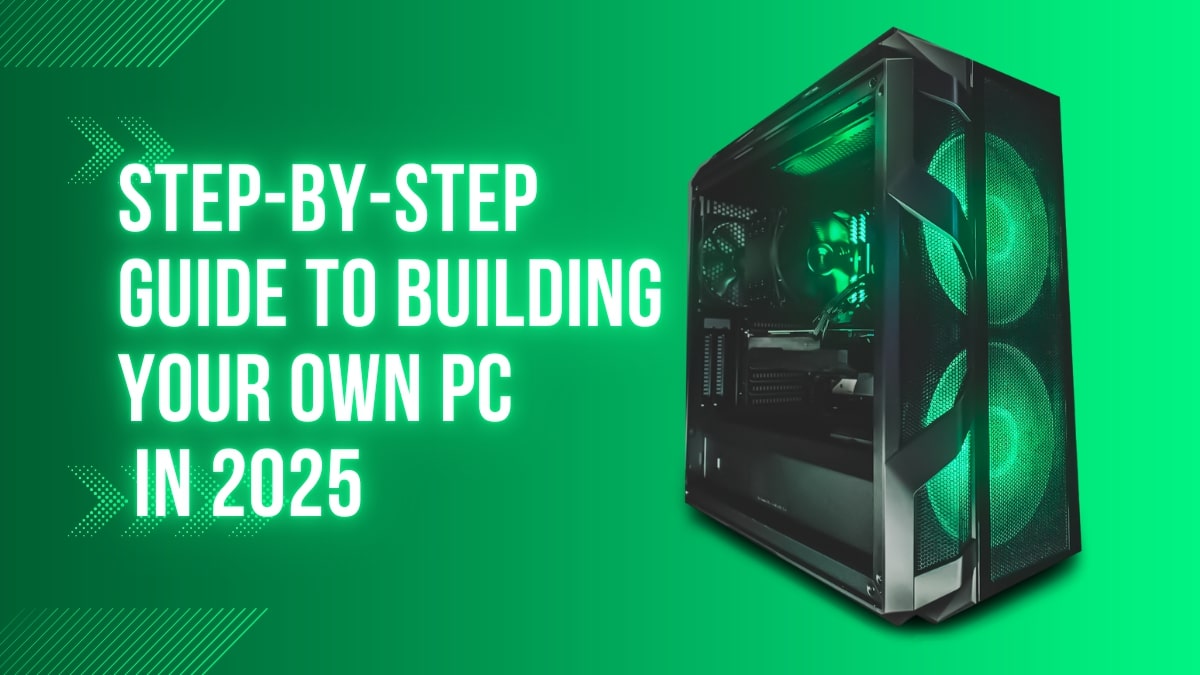
Building your possess PC in 2025 can be both an energizing and fulfilling involvement. Whether you are a gamer, substance maker, or proficient looking for a high-performance workstation, amassing a custom PC permits you to tailor your framework to your particular needs. This direct gives a step-by-step approach to building a PC, guaranteeing that indeed tenderfoots can take after along and make a solid, capable machine.
Introduction
The innovation scene in 2025 offers a wide extend of components with progressed execution, productivity, and compatibility. From next-gen CPUs and GPUs to progressed SSDs and AI-integrated motherboards, choosing the right parts is basic for building a PC that meets your requirements.
Building a PC gives benefits such as fetched effectiveness, customization, upgradability, and a more profound understanding of equipment. With appropriate arranging and the right components, you can collect a framework that conveys remarkable execution for a long time to come.
Step 1: Decide Your PC’s Purpose
Before obtaining components, recognize what you need from your PC.
Consider:
- Gaming, substance creation, gushing, or common use.
- Computer program necessities and compatibility.
- Budget constraints.
This will direct your choice of CPU, GPU, Smash, capacity, and peripherals, guaranteeing the framework adjusts with your execution expectations.
Step 2: Select the Right Components
Selecting consistent and high-quality components is basic. Here are the fundamental parts:
- CPU (Processor): The brain of your PC. Consider multi-core processors for gaming and multitasking.
- GPU (Illustrations Card): Crucial for gaming, video altering, and AI tasks.
- Motherboard: Guarantee compatibility with CPU attachment sort, Smash spaces, and future upgrades.
- Slam: Select for 16GB or higher for gaming and efficiency; higher for substance creation.
- Capacity: SSDs for quicker boot and stack times; consider NVMe for ultra-speed performance.
- Control Supply Unit (PSU): Select a dependable PSU with adequate wattage.
- Case: Guarantee legitimate wind current, compatibility with components, and aesthetics.
- Cooling: Discuss or fluid cooling frameworks depending on your setup.
- Peripherals: Screen, console, mouse, and discretionary extras.
Step 3: Assemble Apparatuses and Plan Workspace
Ensure you have a clean, static-free workspace.
Tools Needed:
- Screwdriver set (ideally magnetic)
- Anti-static wrist strap
- Cable ties
- Warm glue (in case not pre-applied)
Having an organized setup will avoid harm and make get together smoother.
Step 4: Introduce the CPU
- Open the CPU attachment on the motherboard.
- Adjust the processor concurring to the stamped triangle.
- Delicately put it in the attachment and secure the latch.
- Apply warm glue if required.
Tip: Dodge touching the gold pins or contacts to anticipate damage.
Step 5: Introduce RAM
- Open the Smash spaces on the motherboard.
- Adjust the score and immovably embed each adhere until it clicks.
- Check motherboard manual for dual-channel or quad-channel establishment for ideal performance.
Step 6: Introduce Capacity Drives
- Secure SSDs or HDDs in the assigned openings or brackets.
- Interface control and information cables.
- NVMe SSDs ordinarily space specifically into the motherboard for quicker speeds.
Step 7: Introduce the Motherboard in the Case
- Put the I/O shield in the case.
- Adjust the motherboard with standoffs and secure with screws.
- Guarantee no contact between the motherboard and metal case to anticipate brief circuits.
Step 8: Introduce the GPU
- Embed the illustrations card into the PCIe slot.
- Secure with screws to the case.
- Interface fundamental control cables from the PSU.
Tip: Guarantee satisfactory space and wind stream around the GPU.
Step 9: Interface Control Supply and Cables
- Interface the 24-pin motherboard control cable.
- Interface CPU control cable.
- Interface control to GPU, capacity, and peripherals.
- Oversee cables flawlessly to keep up wind current and aesthetics.
Step 10: Introduce Cooling System
- For discuss cooling: join the fan/heatsink to the CPU.
- For fluid cooling: mount the radiator and interface tubes to the CPU block.
- Interface fans to the motherboard or fan controller.
Proper cooling guarantees steady execution and drags out component lifespan.
Step 11: Beginning Boot and BIOS Setup
- Control on the framework and enter BIOS/UEFI.
- Check that all components are recognized.
- Set boot arrange for your working system.
- Upgrade BIOS if necessary.
Tip: Screen temperatures to guarantee cooling is effective.
Step 12: Introduce Working Framework and Drivers
- Embed OS establishment media (USB or DVD).
- Take after on-screen informational to introduce the OS.
- Introduce all fundamental drivers for motherboard, GPU, and peripherals.
- Overhaul OS to the most recent version.
Step 13: Introduce Fundamental Software
Install efficiency devices, browsers, antivirus program, and gaming or imaginative applications depending on your PC’s purpose.
Tip: Keep program upgraded to guarantee security and performance.
Step 14: Test and Optimize
- Run benchmark tests to guarantee stability.
- Screen CPU and GPU temperatures.
- Alter fan bends, overclock if wanted, and change settings for ideal performance.
Conclusion
Building your possess PC in 2025 permits for full customization, tall execution, and a more profound understanding of cutting edge equipment. By carefully selecting components, taking after the get together steps, and optimizing your framework, you can make a capable machine custom fitted to your needs. Whether for gaming, work, or substance creation, a self-built PC gives adaptability, upgradability, and a fulfilling involvement that pre-built frameworks frequently cannot coordinate.